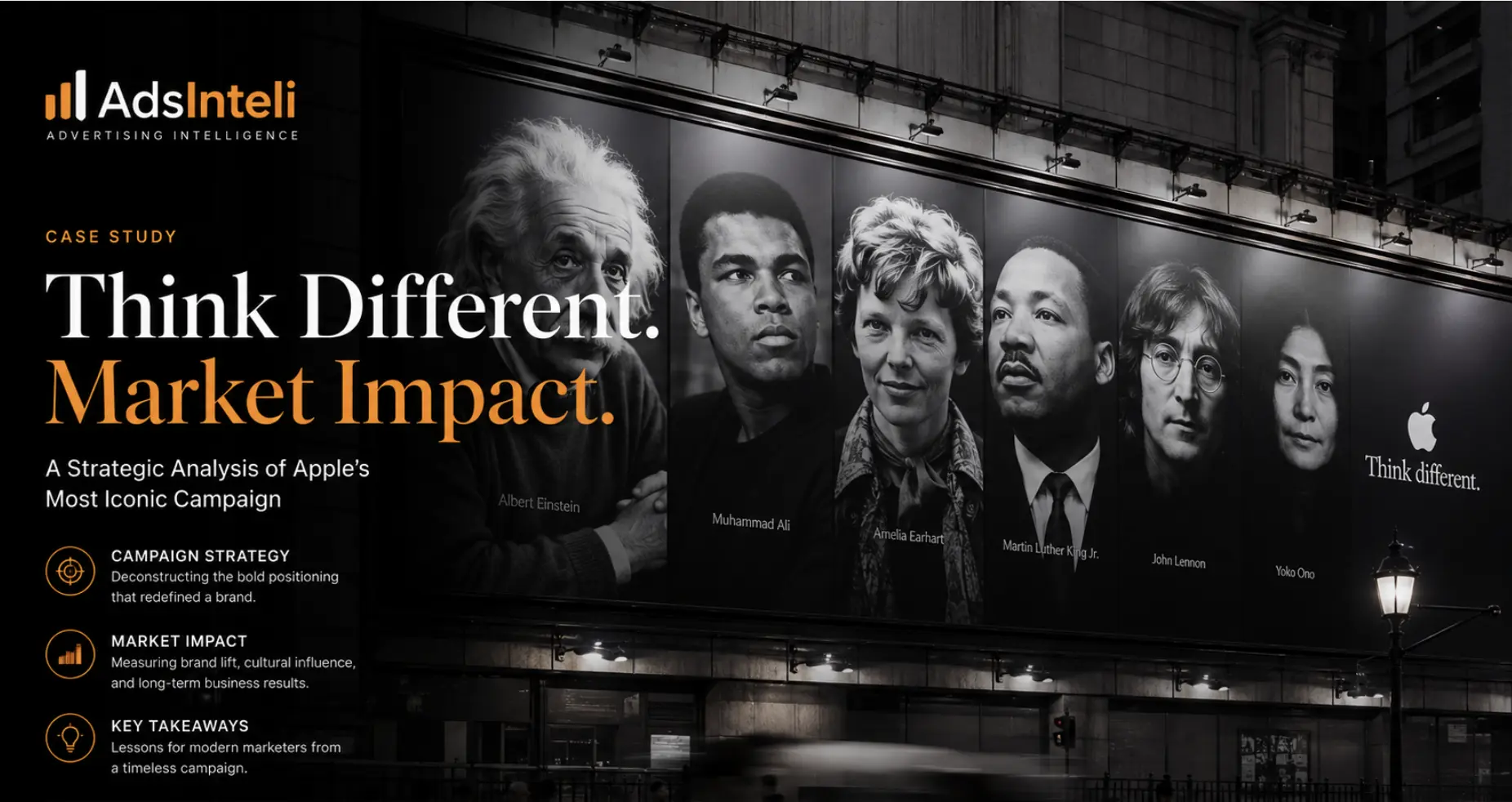

The Think Different Campaign is often described as one of the most powerful advertising campaigns in modern history. Yet its success was never about selling computers directly. Instead, Apple sold an idea, a belief, and an identity.
When the campaign launched in 1997, Apple was struggling. The company was losing market share, facing financial pressure, and competing against much larger technology brands. Most companies in that situation would have promoted product features, pricing, or technical advantages.
Apple chose a completely different path.
The result was a campaign that not only helped revive the company but also changed how brands communicate with consumers. More than two decades later, marketers still study the Think Different Campaign because it demonstrates the power of psychology in advertising.
What Was the Think Different Campaign?
The Think Different Campaign was introduced shortly after Steve Jobs returned to Apple.
Instead of showcasing computers, Apple featured famous innovators, artists, scientists, and visionaries, including:
- Albert Einstein
- Mahatma Gandhi
- Martin Luther King Jr.
- Amelia Earhart
- Pablo Picasso
- Thomas Edison
The advertisements carried a simple message:
“Think Different.”
The campaign celebrated individuals who challenged conventions and changed the world.
Rather than saying, “Buy an Apple computer,” Apple invited people to join a movement.
Why the Think Different Campaign Was Different
Most technology advertisements in the 1990s focused on:
- Processor speed
- Hardware specifications
- Storage capacity
- Pricing comparisons
Apple ignored all of these topics.
Instead, the company focused on emotions, aspirations, and identity.
This approach transformed the brand from a computer manufacturer into a symbol of creativity and innovation.
That decision became one of the smartest marketing moves in advertising history.
The Psychology Behind the Think Different Campaign
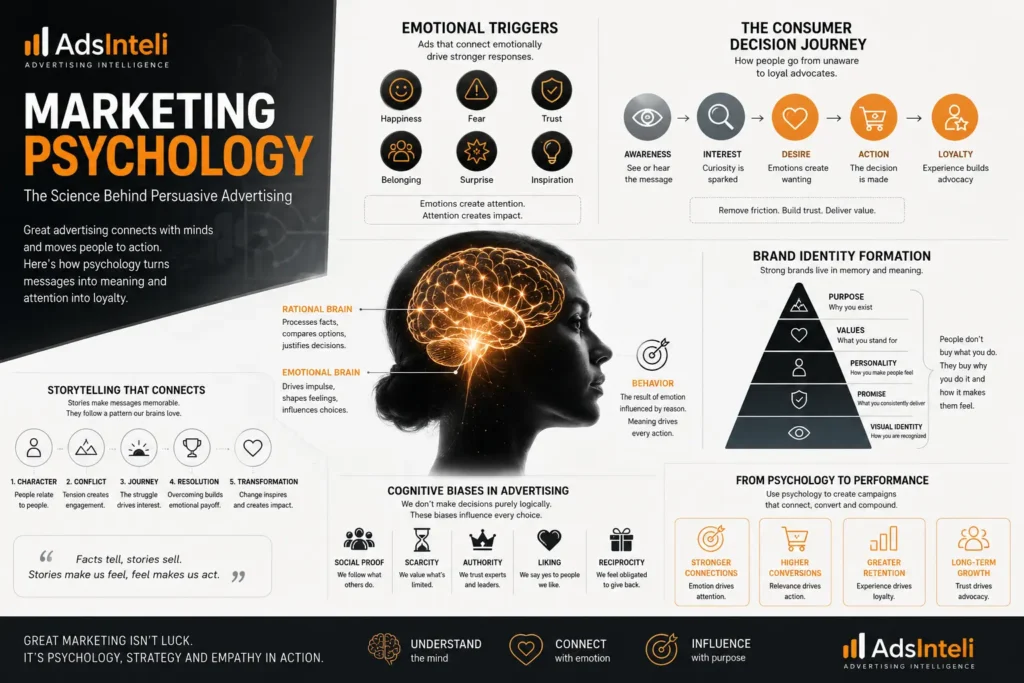
Identity-Based Marketing in the Think Different Campaign
One of the strongest psychological principles behind the Think Different Campaign was identity marketing.
People rarely buy products solely because of their features.
Instead, they buy products that reflect who they are or who they want to become.
Apple understood this concept before many brands did.
The campaign essentially told consumers:
“If you see yourself as creative, innovative, and independent, Apple is your brand.”
This created an emotional connection that competitors struggled to match.
The Think Different Campaign and Emotional Advertising
Human beings make decisions emotionally before justifying them logically.
Apple leveraged this behavior perfectly.
The campaign featured inspiring personalities who had changed the world through courage, creativity, and unconventional thinking.
As viewers watched the advertisements, they experienced emotions such as:
- Inspiration
- Admiration
- Hope
- Ambition
- Curiosity
These emotions became associated with Apple itself.
As a result, Apple wasn’t selling technology.
It was selling possibility.
Storytelling in the Think Different Campaign
Stories are easier to remember than facts.
While consumers may forget technical specifications, they remember meaningful narratives.
The Think Different Campaign told a story about:
- Challenging norms
- Breaking boundaries
- Creating change
- Pursuing greatness
Every featured individual represented that story.
The audience naturally connected Apple’s products with those values.
This storytelling approach continues to influence modern advertising campaigns.
Social Identity Theory and the Think Different Campaign
Psychologists have long studied Social Identity Theory.
The theory suggests that people define themselves through group membership.
Apple effectively created a tribe.
The campaign positioned Apple users as:
- Creators
- Innovators
- Dreamers
- Rebels
- Visionaries
Consumers didn’t just purchase Apple products.
They joined a community.
This sense of belonging strengthened customer loyalty and increased brand advocacy.
How the Think Different Campaign Built Brand Loyalty
Many companies focus on customer satisfaction.
Apple focused on emotional loyalty.
The difference is significant.
Satisfied customers may switch brands.
Emotionally connected customers often remain loyal even when alternatives exist.
The Think Different Campaign created this emotional connection by aligning Apple with personal values rather than product specifications.
As a result, Apple built one of the strongest brand communities in the world.
The Power of Simplicity in the Think Different Campaign
Another psychological advantage of the Think Different Campaign was simplicity.
The slogan contained only two words.
Yet those two words communicated:
- Creativity
- Innovation
- Courage
- Individuality
- Original thinking
Great advertising often removes complexity rather than adding it.
Apple demonstrated that a simple message can create a lasting impact when it connects with a powerful idea.
Lessons Marketers Can Learn from the Think Different Campaign
Sell Beliefs Before Products
People connect with beliefs.
Products simply become symbols of those beliefs.
Apple sold a philosophy before selling technology.
Create Emotional Connections
Features can be copied.
Emotional relationships cannot.
The strongest brands focus on emotional engagement.
Build a Community
Consumers want to belong.
Successful brands create identities and communities around shared values.
Use Storytelling
Stories make brands memorable.
Facts inform.
Stories inspire.
Read More Articles on Advertising Case Studies
Keep Messaging Simple
The most powerful campaigns often communicate a single idea clearly and consistently.
How the Think Different Campaign Influenced Modern Advertising
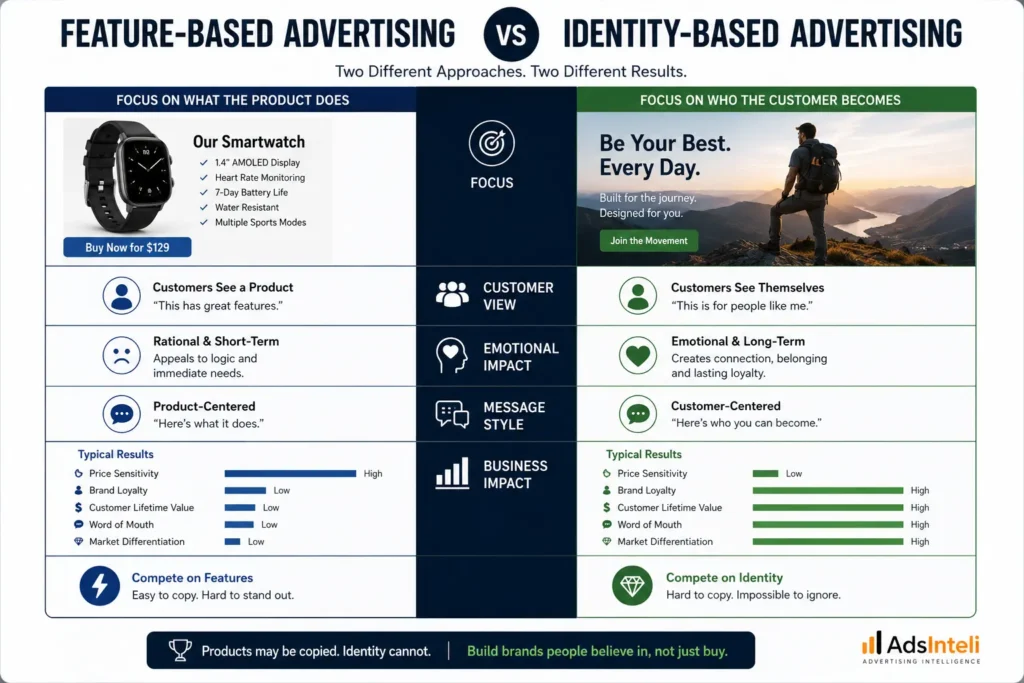
Today, many successful brands use similar strategies.
Examples include:
- Nike promoting personal achievement
- Tesla promoting innovation
- Patagonia promoting environmental responsibility
- Airbnb promoting belonging
These brands focus on identity and values rather than product features.
Apple helped popularize this approach through the Think Different Campaign.
Its influence can still be seen across digital marketing, social media campaigns, and brand storytelling efforts worldwide.
Common Myths
Myth 1: The Campaign Was About Computers
Reality: The campaign was primarily about identity, values, and brand positioning.
Myth 2: Famous People Alone Made the Campaign Successful
Reality: The celebrities supported the message, but the psychological connection was the true driver of success.
Myth 3: Emotional Advertising Doesn’t Affect Sales
Reality: Emotional connections often drive stronger long-term customer loyalty and purchasing behavior.
Key Takeaways
- The Think Different Campaign focused on identity rather than products.
- Apple used emotional advertising to create lasting brand loyalty.
- Storytelling played a major role in campaign success.
- Simplicity made the message memorable.
- The campaign transformed Apple’s brand perception.
- Modern marketers still study its psychological principles.
Conclusion
The Think Different Campaign remains one of the most influential advertising campaigns ever created because it understood something fundamental about human behavior: people want meaning, identity, and inspiration.
Apple didn’t ask consumers to buy a computer.
Instead, it invited them to see themselves differently.
That psychological shift helped revive a struggling company and transformed Apple into one of the world’s most valuable brands.
For advertisers, the lesson remains timeless: when a campaign connects with human identity and emotion, it can achieve far more than any product-focused message ever could.
What do you think was the biggest reason behind the success of the Think Different Campaign? Share your thoughts and join the conversation.
FAQ
1. What was Apple’s Think Different Campaign?
It was a brand campaign launched in 1997 that celebrated innovators and encouraged people to challenge conventional thinking.
2. Why is the Think Different Campaign considered successful?
Because it created a strong emotional connection between Apple and consumers while repositioning the brand as a symbol of creativity and innovation.
3. Who created the Think Different Campaign?
The campaign was developed by Apple in partnership with the advertising agency TBWA\Chiat\Day.
4. What psychological principles were used in the campaign?
Identity marketing, emotional advertising, storytelling, social identity theory, and aspirational branding.
5. What can marketers learn from the Think Different Campaign?
Marketers can learn the importance of emotional connections, storytelling, simplicity, and value-driven brand positioning.