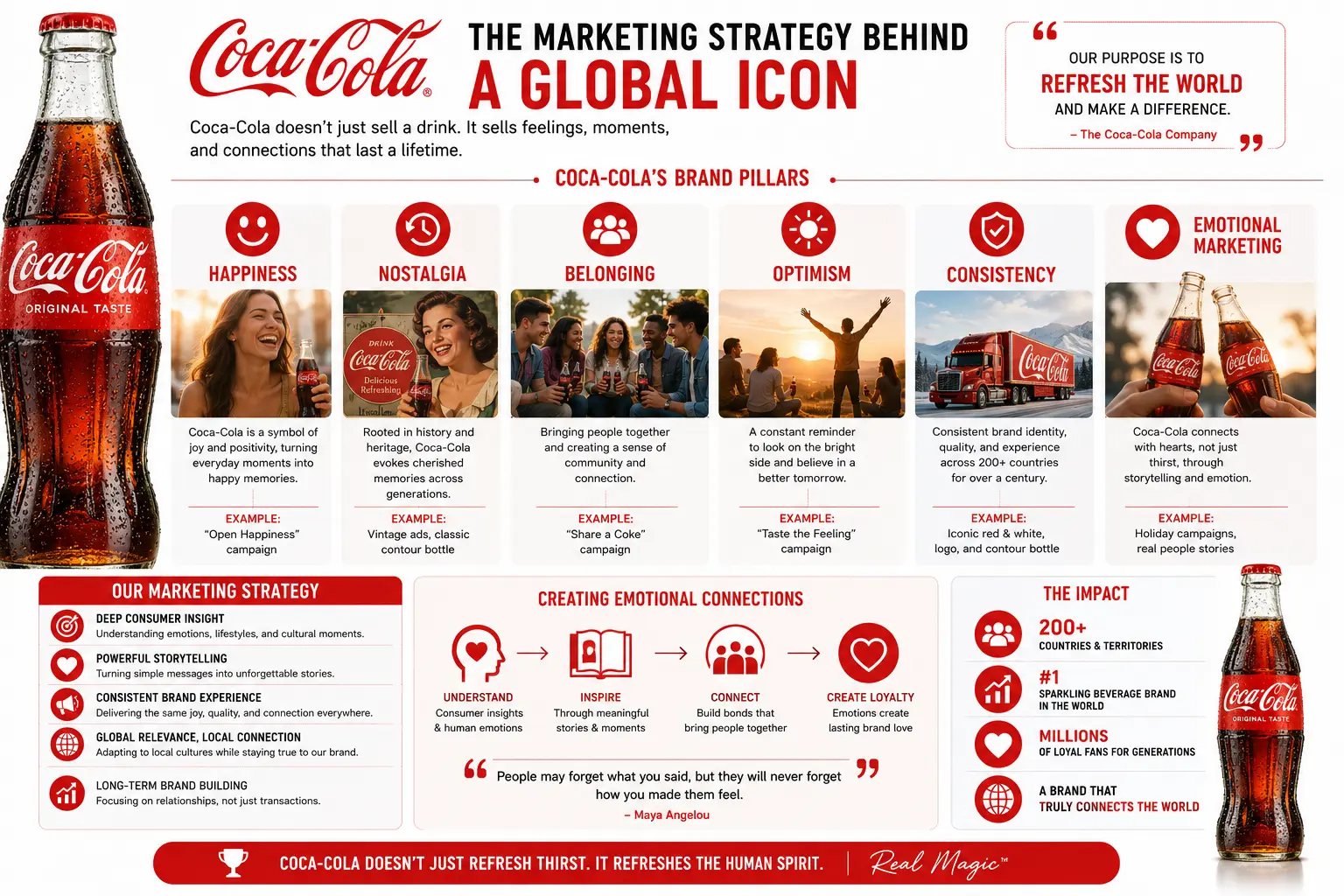

The Coca-Cola Marketing Strategy is one of the most studied marketing success stories in history.
After all, Coca Cola sells a product that millions of competitors can replicate.
Sugar.
Carbonated water.
Flavoring.
That’s it.
Yet Coca Cola became one of the most valuable and recognizable brands on Earth.
How?
The answer is surprisingly simple.
Coca Cola stopped selling a drink.
Instead, it started selling happiness.
For more than a century, Coca Cola has built its brand around emotions, memories, celebrations, friendships, and shared experiences. Its advertisements rarely focus on ingredients, manufacturing processes, or product specifications.
Instead, they focus on how people feel.
This approach transformed Coca Cola from a beverage company into a cultural icon recognized across generations and continents.
The Coca Cola Marketing Strategy offers valuable lessons for marketers, entrepreneurs, and advertisers seeking to build brands that people remember, trust, and love.
The Early Years of Coca-Cola
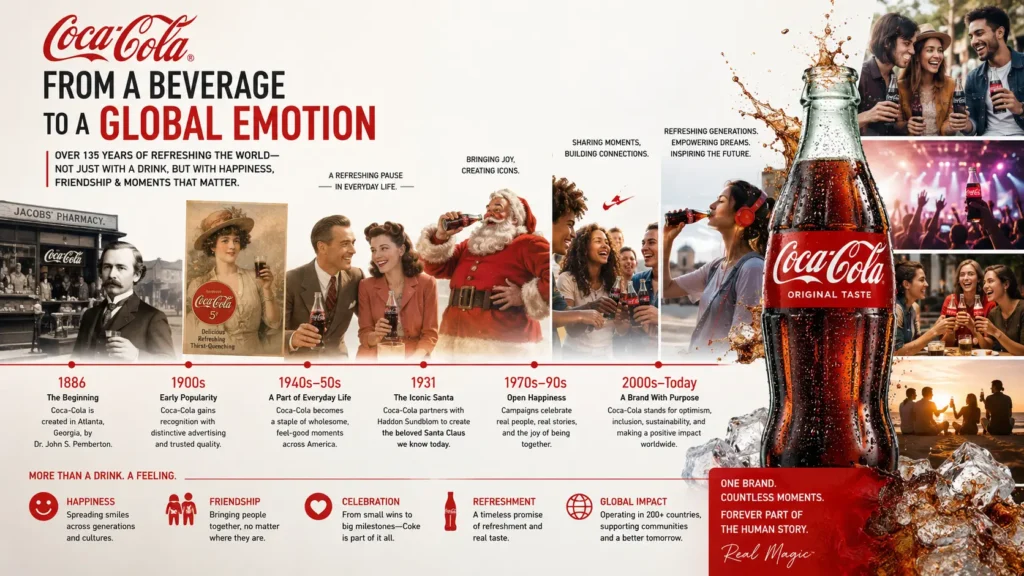
When Coca-Cola was introduced in 1886, it was marketed as a refreshing tonic.
The product itself was not particularly unique.
Many beverages competed for attention.
Over time, Coca Cola realized something important.
Competing solely on product features would be difficult.
Competitors could copy flavors.
They could match prices.
They could create similar packaging.
But creating emotional connections was much harder to replicate.
This realization became a turning point in the Coca Cola Marketing Strategy.
The Shift From Product Marketing to Emotional Marketing
Most companies advertise what their products do.
Coca Cola focused on what people feel.
Instead of saying:
“Our drink tastes great.”
Coca Cola communicated messages like:
- Share happiness.
- Celebrate togetherness.
- Enjoy life’s moments.
- Create memories.
This shift changed everything.
Consumers no longer saw Coca Cola as a beverage.
They saw it as part of birthdays, holidays, sporting events, family gatherings, and celebrations.
The product became associated with positive emotions.
This emotional connection became one of Coca Cola’s strongest competitive advantages.
Read More Articles on Advertising Intelligence
Why Coca-Cola Rarely Talks About Ingredients
Imagine a Coca-Cola commercial focused entirely on:
- Sugar content
- Carbonation levels
- Flavor formulas
Would anyone remember it?
Probably not.
Now imagine a commercial showing:
- Families celebrating together
- Friends sharing a meal
- Children opening holiday gifts
- People enjoying meaningful moments
Which advertisement feels more memorable?
The second one.
The Coca Cola Marketing Strategy understands that consumers remember emotions far longer than product specifications.
This principle aligns closely with Emotional Marketing.
People buy products.
But they remember experiences.
The Psychology Behind Coca-Cola’s Success
The Coca Cola Marketing Strategy succeeds because it taps into fundamental human emotions.
Happiness
Perhaps no emotion is more closely associated with Coca Cola than happiness.
Many campaigns explicitly focused on joy and positivity.
Examples include:
- Open Happiness
- Taste the Feeling
These campaigns connected Coca-Cola with positive emotional experiences.
Belonging
Humans naturally seek connection.
Many Coca Cola advertisements emphasize:
- Friendship
- Family
- Community
- Shared experiences
The product becomes a symbol of togetherness.
Nostalgia
Coca-Cola frequently uses nostalgia in advertising.
Vintage imagery.
Classic holiday themes.
Long-standing traditions.
These elements create emotional familiarity and trust.
Optimism
The brand consistently communicates positivity.
This emotional consistency helps reinforce brand identity across generations.
The Power of Consistency
One of the most underrated aspects of the Coca-Cola Marketing Strategy is consistency.
Many brands change messaging frequently.
Coca Cola has spent decades reinforcing similar emotional themes.
Examples include:
- Happiness
- Togetherness
- Celebration
- Optimism
This consistency creates powerful brand associations.
When people see the Coca Cola logo, they often think of emotions before they think of the product.
The “Open Happiness” Campaign
Launched in 2009, Open Happiness became one of Coca Cola’s most recognizable campaigns.
The campaign did not focus on ingredients.
It did not focus on product superiority.
Instead, it focused on emotional experiences.
The message was simple:
Opening a Coca-Cola could create a small moment of happiness.
The campaign succeeded because it aligned the brand with a universal human desire.
Everyone wants happiness.
By connecting its product to that emotion, Coca Cola strengthened its brand identity.
The “Share a Coke” Campaign
Few campaigns demonstrate the Coca Cola Marketing Strategy better than Share a Coke.
Instead of printing the Coca Cola logo on bottles, the company printed people’s names.
This simple idea transformed packaging into a personal experience.
Consumers actively searched for:
- Their own names
- Friends’ names
- Family members’ names
The campaign generated:
- Massive social media engagement
- User-generated content
- Increased sales
- Strong emotional connections
Most importantly, it encouraged people to share.
The product became part of personal relationships.
How Coca-Cola Turned Santa Claus Into a Brand Asset
Many people associate Santa Claus with Coca Cola.
While Coca Cola did not invent Santa Claus, its advertising helped popularize the modern image of Santa.
Through decades of holiday campaigns, Coca Cola linked itself with:
- Christmas
- Family
- Generosity
- Tradition
This is a powerful example of long-term brand building.
The company transformed seasonal advertising into a global emotional asset.
Coca-Cola’s Global Branding Strategy
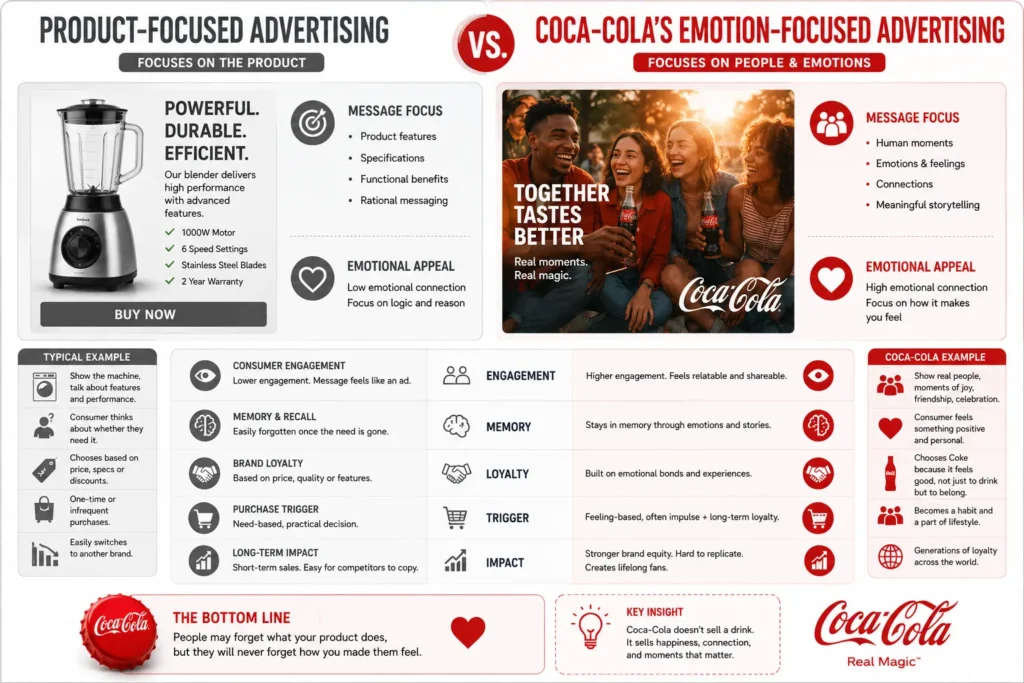
The Coca Cola Marketing Strategy succeeds globally because emotions are universal.
People in different countries may speak different languages.
They may have different cultures.
They may have different lifestyles.
However, emotions such as happiness, friendship, and belonging are understood everywhere.
This allows Coca Cola to maintain a consistent global identity while adapting campaigns to local markets.
What Marketers Can Learn From Coca-Cola
Sell Outcomes, Not Features
Consumers care about what products mean to them.
Not just what products are.
Build Emotional Connections
People remember feelings longer than specifications.
Stay Consistent
Strong brands reinforce the same core message repeatedly.
Invest in Brand Assets
Logos.
Colors.
Packaging.
Characters.
Taglines.
All contribute to brand recognition.
Think Long Term
The Coca Cola Marketing Strategy was not built in a year.
It evolved over decades.
Strong brands require patience and consistency.
Common Myths About Coca-Cola’s Success
Myth 1: Coca-Cola Wins Because of Taste
Reality: Brand strength plays a significant role in consumer preference.
Myth 2: Advertising Alone Created Coca-Cola
Reality: Product availability, distribution, consistency, and branding all contributed.
Myth 3: Coca-Cola Only Sells Beverages
Reality: Coca Cola sells experiences, emotions, and memories.
Myth 4: Small Businesses Cannot Learn From Coca-Cola
Reality: Emotional connection and consistent branding apply to businesses of every size.
Key Takeaways
- The Coca Cola Marketing Strategy focuses on emotions rather than product features.
- Coca Cola built its brand around happiness, belonging, nostalgia, and optimism.
- Emotional consistency has been a major factor in Coca-Cola’s success.
- Campaigns like Open Happiness and Share a Coke strengthened emotional connections.
- Strong brands sell feelings, not just products.
- Long-term consistency creates lasting brand value.
Conclusion
The Coca-Cola Marketing Strategy demonstrates one of the most important lessons in advertising.
Products can be copied.
Features can be matched.
Prices can be undercut.
But emotional connections are much harder to replicate.
For more than a century, Coca-Cola has built its brand around happiness, togetherness, and positive experiences.
The company rarely talks about ingredients because it understands something many marketers overlook.
Consumers may buy products.
But they connect with emotions.
And that simple insight helped Coca-Cola become one of the strongest brands the world has ever seen.
FAQ
What is Coca-Cola’s marketing strategy?
The Coca-Cola Marketing Strategy focuses on emotional branding, storytelling, consistency, and creating positive associations around happiness and togetherness.
Why is Coca-Cola considered a marketing success?
Coca-Cola built strong emotional connections with consumers while maintaining consistent branding across generations and markets.
What is the Share a Coke campaign?
Share a Coke was a campaign that replaced the Coca-Cola logo on bottles with people’s names, encouraging sharing and personal connections.
How does Coca-Cola use Emotional Marketing?
Coca-Cola uses emotions such as happiness, nostalgia, friendship, and belonging to create memorable advertising experiences.
What can marketers learn from Coca-Cola?
Marketers can learn the importance of emotional branding, consistency, storytelling, and long-term brand building.