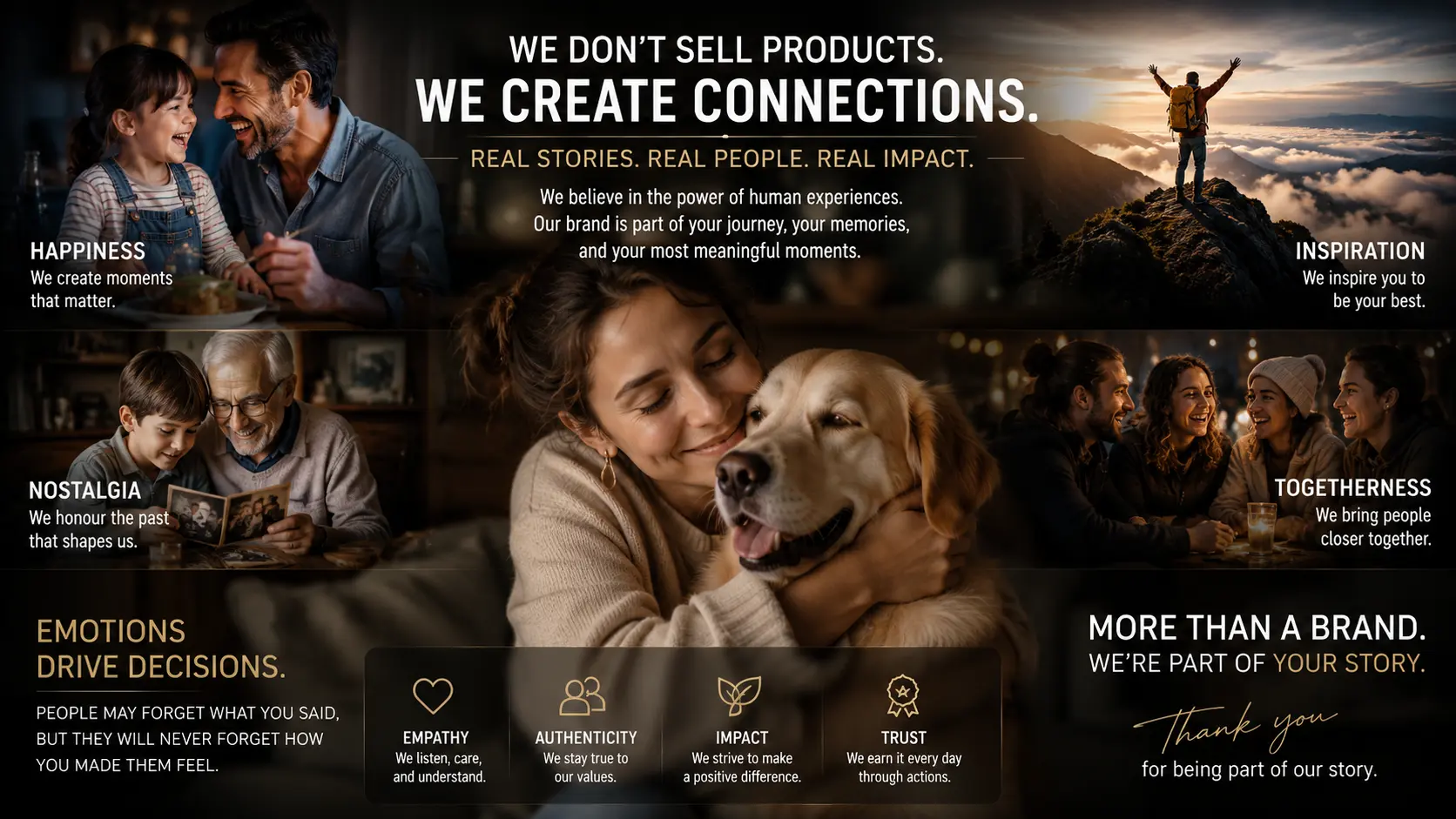

Think about the most memorable advertisement you have ever seen. Perhaps it made you smile. Perhaps it made you cry. Perhaps it inspired you. Or perhaps it reminded you of someone you love. Now think about the product being advertised. Chances are, you remember the feeling more than the product specifications. That’s not an accident. It”’s the result of Emotional Marketing, one of the most powerful principles in advertising.
The most successful advertisements rarely focus on features alone. Instead, they create emotional experiences that connect with people on a deeper level. Great brands understand that consumers may forget statistics, specifications, and technical details, but they rarely forget how a message made them feel.
This is why Emotional Marketing has become a cornerstone of modern advertising. From Nike and Apple to Coca-Cola and Dove, some of the world’s most successful brands use emotions to build trust, strengthen loyalty, and influence buying decisions.
The hidden truth is simple:
People do not always buy the best product.
They often buy the product that makes them feel something.
What Is Emotional Marketing?
Emotional Marketing is a marketing strategy that uses emotions to influence consumer perceptions, decisions, and behavior.
Instead of focusing solely on product features, it focuses on creating emotional connections between brands and consumers.
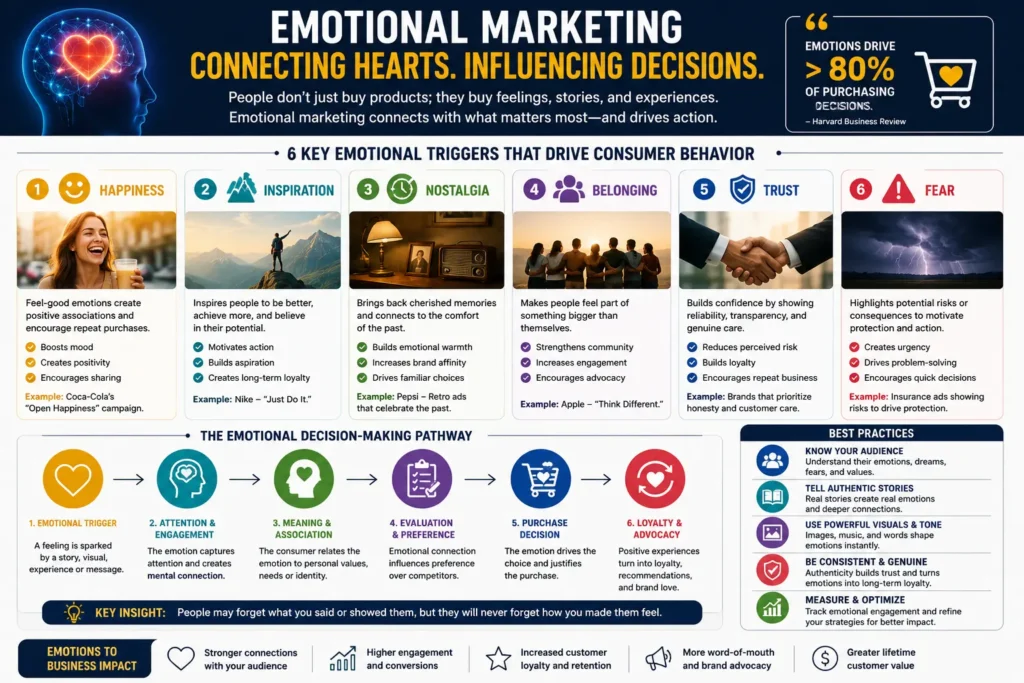
These emotions may include:
- Happiness
- Inspiration
- Trust
- Belonging
- Hope
- Excitement
- Nostalgia
- Pride
- Empathy
- Fear
The goal of Emotional Marketing is not manipulation.
The goal is connection.
When consumers feel emotionally connected to a brand, they are more likely to:
- Remember it
- Trust it
- Recommend it
- Purchase from it
- Remain loyal to it
Why Emotional Marketing Works So Well
The effectiveness of Emotional Marketing comes from human psychology.
Humans are emotional beings.
Although we like to believe we make decisions rationally, research consistently shows that emotions play a major role in decision-making.
Before consumers justify purchases with logic, emotions often influence the initial decision.
Consider these purchases:
- Luxury watches
- Premium smartphones
- Designer clothing
- Sports cars
Many consumers can find cheaper alternatives.
Yet they choose brands that make them feel successful, confident, inspired, or connected.
This is why Emotional Marketing remains so powerful.
The Psychology Behind Emotional Marketing
Emotional Marketing Creates Stronger Memories
People remember emotions more than facts.
Imagine two advertisements:
Advertisement A lists product specifications.
Advertisement B tells a moving story about family, hope, and achievement.
Which one is more likely to be remembered?
For most people, the emotional story wins.
Emotions help create lasting memories.
This is one reason Emotional Marketing improves brand recall.
Emotional Marketing Builds Trust
Trust is one of the most valuable assets a brand can possess.
Consumers are naturally skeptical of advertising.
However, emotional stories often feel more authentic than promotional claims.
When brands communicate shared values and experiences, trust increases.
This is why many successful campaigns focus on people rather than products.
Emotional Marketing Influences Decision-Making
Neuroscience research suggests that emotions play a critical role in decision-making.
Without emotional input, decision-making becomes significantly more difficult.
Consumers frequently rely on emotional signals when evaluating products, services, and brands.
This is why Emotional Marketing influences purchasing behavior so effectively.
The Most Powerful Emotions Used in Emotional Marketing
Happiness
Happiness is one of the most commonly used emotions in advertising.
Brands often associate themselves with:
- Celebration
- Friendship
- Family
- Positive experiences
Example:
Coca-Cola rarely advertises soft drinks.
Instead, it advertises happiness.
The product becomes associated with positive emotions.
Inspiration
Brands such as Nike frequently use inspiration.
Their advertisements focus on:
- Achievement
- Determination
- Overcoming obstacles
- Personal growth
Consumers connect with these stories because they reflect aspirations and goals.
Nostalgia
Nostalgia reminds people of meaningful memories.
Examples include:
- Childhood experiences
- Family traditions
- Cultural moments
Brands often use nostalgia to create familiarity and comfort.
Belonging
Humans naturally want to belong.
Many brands position themselves as communities rather than products.
Examples include:
- Apple users
- Harley-Davidson riders
- Fitness communities
Belonging creates strong emotional connections.
Fear
Fear can also be effective when used responsibly.
Examples include:
- Insurance advertising
- Cybersecurity campaigns
- Health awareness campaigns
Fear highlights risks and motivates action.
However, excessive fear can create negative reactions.
Read More Articles On Advertising Psychology
Real-World Examples of Emotional Marketing
Nike: Selling Determination
Nike rarely focuses on shoe specifications.
Instead, Nike advertisements emphasize:
- Perseverance
- Hard work
- Achievement
The famous “Just Do It” campaign is not about shoes.
It is about overcoming challenges.
This emotional message has helped Nike become one of the world’s strongest brands.
Apple: Selling Identity
Apple advertisements often focus on creativity and individuality.
The famous “Think Different” campaign celebrated innovators and dreamers.
The emotional message was clear:
Apple is for people who challenge the status quo.
The campaign created emotional connections far beyond product features.
Coca-Cola: Selling Happiness
Coca-Cola has spent decades associating its brand with positive emotions.
Family gatherings.
Friendship.
Celebrations.
Togetherness.
The company understands that consumers connect emotionally before they connect logically.
Dove: Selling Self-Confidence
Dove’s “Real Beauty” campaign focused on self-esteem and authenticity.
Rather than promoting unrealistic standards, Dove connected with consumers emotionally.
The campaign became one of the most discussed examples of Emotional Marketing.
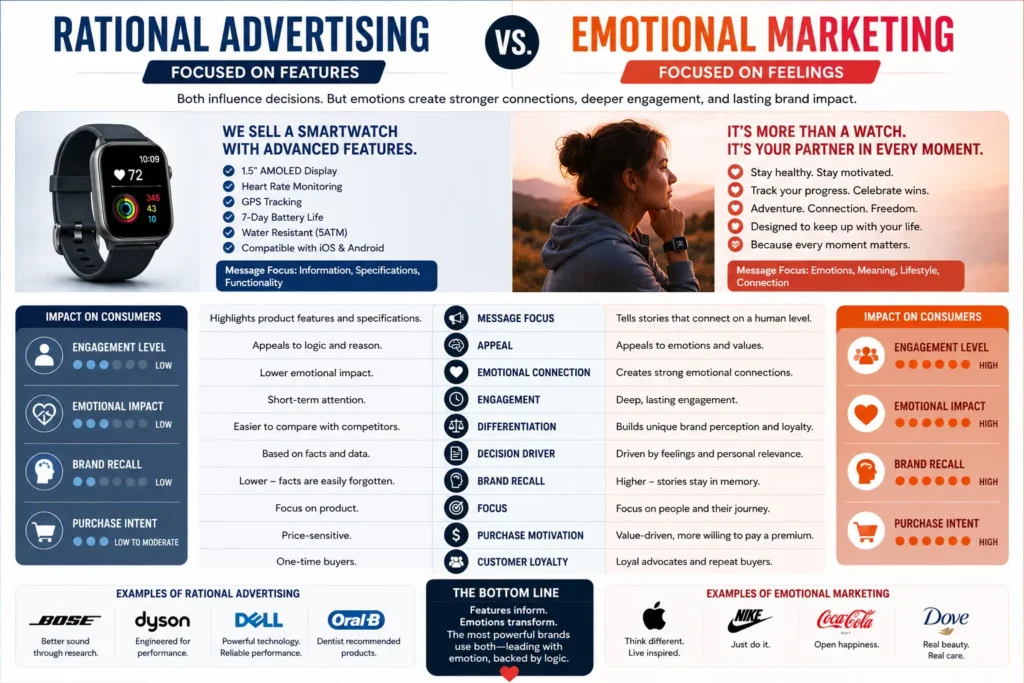
Emotional Marketing vs Rational Marketing
Both approaches have value.
However, they achieve different goals.
Rational Marketing
Focuses on:
- Features
- Pricing
- Specifications
- Performance
- Benefits
Example:
“This smartphone has a 5000mAh battery.”
Emotional Marketing
Focuses on:
- Feelings
- Aspirations
- Identity
- Relationships
- Experiences
Example:
“This smartphone helps you capture life’s most important moments.”
Both approaches can work together.
The strongest campaigns often combine emotional and rational elements.
When Emotional Marketing Works Best
Emotional Marketing is particularly effective when:
- Building brand awareness
- Creating loyalty
- Launching new brands
- Differentiating products
- Strengthening customer relationships
The more competitive a market becomes, the more valuable emotional connections become.
When Emotional Marketing Fails
Despite its effectiveness, Emotional Marketing can fail when:
Emotions Feel Forced
Consumers quickly detect inauthentic messaging.
The Product Doesn’t Deliver
Strong emotions may attract attention initially.
However, poor experiences damage trust.
The Message Lacks Relevance
Not every emotional appeal resonates with every audience.
Understanding customer motivations is critical.
Emotional Marketing and Brand Loyalty
One of the greatest advantages of Emotional Marketing is its impact on loyalty.
People often remain loyal to brands that align with their values and identity.
Examples include:
- Apple enthusiasts
- Nike fans
- Harley-Davidson riders
These consumers are not simply purchasing products.
They are supporting brands they emotionally connect with.
What Marketers Can Learn From Emotional Marketing
The biggest lesson is simple:
People remember how brands make them feel.
Features matter.
Pricing matters.
Quality matters.
But emotions often determine which brands stand out.
Successful marketers focus on:
- Storytelling
- Authenticity
- Human experiences
- Emotional connections
- Shared values
The goal is not to manipulate emotions.
The goal is to create meaningful connections.
Common Myths About Emotional Marketing
Myth 1: Emotional Marketing Only Works for Consumer Brands
Reality: B2B buyers are human too. Emotions influence business decisions as well.
Myth 2: Emotional Marketing Replaces Product Quality
Reality: Emotions attract customers. Quality keeps them.
Myth 3: Emotional Marketing Means Making People Cry
Reality: Emotional Marketing includes happiness, inspiration, belonging, trust, nostalgia, and many other emotions.
Myth 4: Logic Doesn’t Matter
Reality: The strongest campaigns often combine emotional and rational messaging.
Key Takeaways
- Emotional Marketing uses emotions to influence consumer behavior.
- People often feel before they buy.
- Emotions improve memory, trust, and brand loyalty.
- Successful brands focus on emotional connections rather than product features alone.
- Storytelling is one of the most powerful Emotional Marketing tools.
- Authenticity is critical for long-term success.
- Emotional Marketing works across both B2C and B2B industries.
Conclusion
Great advertisements do more than communicate information.
They create experiences.
They inspire.
They reassure.
They entertain.
They connect.
This is why Emotional Marketing remains one of the most powerful principles in advertising.
Consumers may forget product specifications.
They may forget promotional messages.
They may forget pricing.
But they rarely forget how a brand made them feel.
The brands that understand this principle create stronger relationships, greater loyalty, and more memorable campaigns.
In the end, people may buy products.
But they connect with emotions.
And that is why great ads make you feel something.
FAQ
What is Emotional Marketing?
Emotional Marketing is a strategy that uses emotions such as happiness, trust, inspiration, nostalgia, and belonging to influence consumer behavior and build stronger brand connections.
Why does Emotional Marketing work?
Emotional Marketing works because emotions influence memory, trust, and decision-making more effectively than facts alone.
What emotions are commonly used in Emotional Marketing?
Common emotions include happiness, inspiration, nostalgia, belonging, trust, hope, pride, and fear.
Which brands use Emotional Marketing successfully?
Nike, Apple, Coca-Cola, Dove, and many other leading brands use Emotional Marketing extensively.
Can Emotional Marketing increase sales?
Yes. Emotional Marketing often improves brand recall, customer loyalty, engagement, and purchasing decisions.