
Loss Aversion Marketing is one of the most powerful principles in consumer psychology, yet most people don’t realize how often it influences their decisions.
Imagine someone offers you two choices.
Option A
Receive ₹1,000.
Option B
Avoid losing ₹1,000 you already have.
Most people react more strongly to the second option.
Logically, the financial impact is identical.
Emotionally, it feels completely different.
This simple example reveals a fascinating truth about human behavior: people hate losing far more than they enjoy winning.
Marketers have understood this principle for decades.
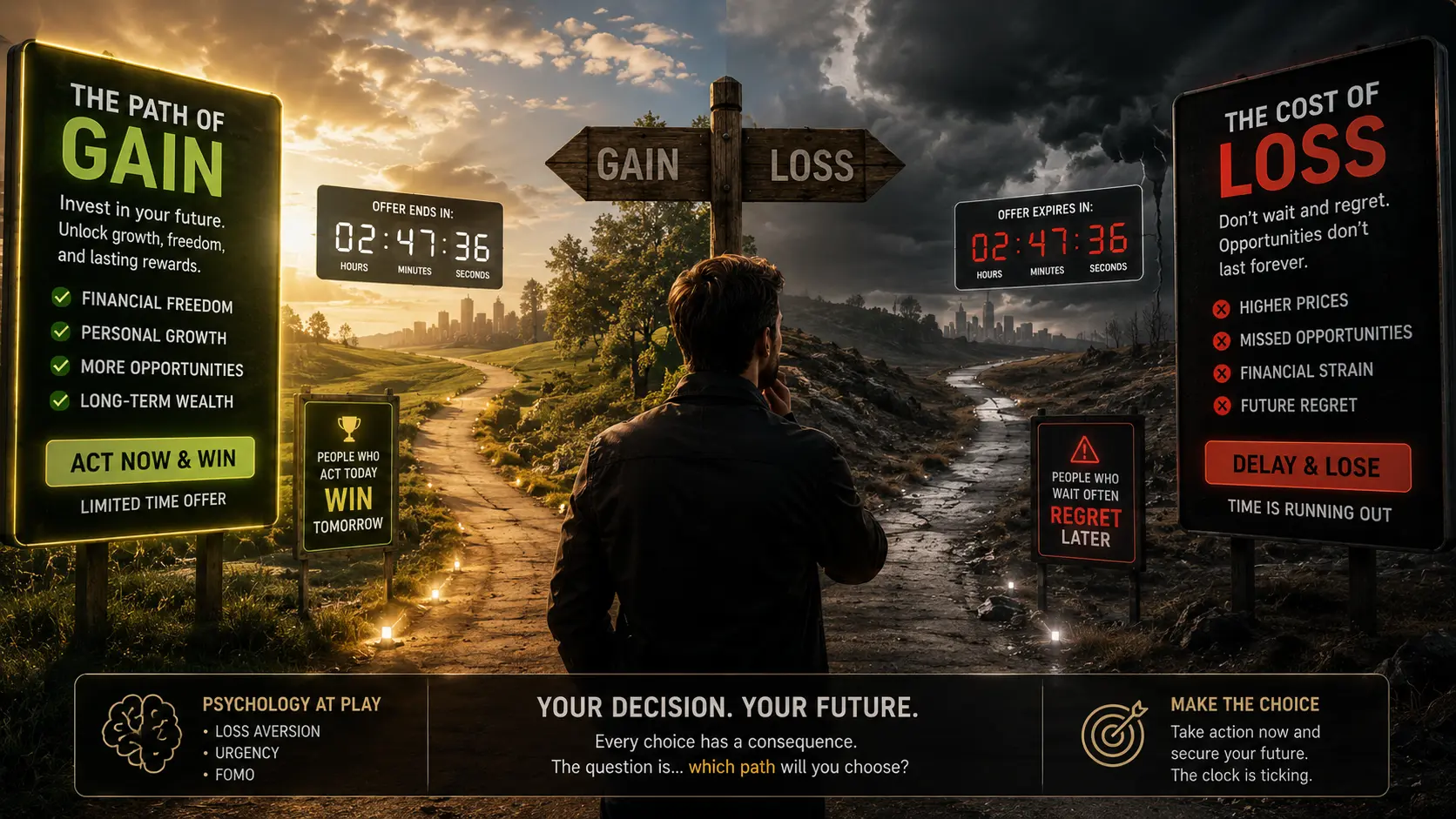
In fact, many of the world’s most successful advertising campaigns are built around Loss Aversion Marketing, a strategy that motivates action by highlighting what consumers might lose rather than what they might gain.
Whether it’s a limited-time discount, an expiring subscription, a disappearing opportunity, or an abandoned shopping cart reminder, brands frequently use loss aversion to encourage action.
The reason is simple.
Humans are wired to avoid losses.
And understanding Loss Aversion Marketing helps explain why some advertisements are remarkably effective at influencing consumer behavior.
What Is Loss Aversion Marketing?
Loss Aversion Marketing is a marketing strategy that leverages people’s tendency to fear losses more strongly than they value equivalent gains.
The concept originates from behavioral economics and consumer psychology.
It suggests that losing something creates more emotional pain than gaining something of equal value creates pleasure.
For example:
Most people would feel worse about losing ₹1,000 than they would feel happy about gaining ₹1,000.
This imbalance influences decision-making across many areas of life, including purchasing behavior.
Examples of Loss Aversion Marketing include:
- Limited-time discounts
- Subscription expiration warnings
- Cart abandonment emails
- Membership renewal reminders
- Flash sales
- Early-bird pricing
- Trial expiration notifications
- Loyalty point expiration alerts
Rather than emphasizing benefits alone, these messages focus on what consumers could lose if they fail to act.
Why Loss Aversion Marketing Works So Well
The effectiveness of Loss Aversion Marketing is rooted in human psychology.
Humans Naturally Fear Loss
Throughout history, avoiding losses often meant survival.
Losing food.
Losing shelter.
Losing social support.
Losing resources.
The consequences of loss were often more severe than the benefits of additional gains.
As a result, humans evolved to pay close attention to potential losses.
Although modern life has changed dramatically, this psychological tendency remains.
Losses Feel More Intense Than Gains
One of the most important discoveries in behavioral economics is that losses create stronger emotional reactions than gains.
Imagine finding ₹500 on the street.
You would probably feel happy.
Now imagine losing ₹500 from your wallet.
The emotional reaction is often significantly stronger.
This imbalance explains why Loss Aversion Marketing can be more persuasive than benefit-focused advertising.
The Psychology Behind Loss Aversion Marketing
Loss Aversion Marketing Activates Fear
Fear is one of the strongest emotions in human decision-making.
Consumers often ask themselves:
- What if I miss this opportunity?
- What if prices increase later?
- What if the offer expires?
- What if I regret not acting?
These questions create psychological tension.
It leverages this tension to encourage action.
Loss Aversion Marketing Reduces Procrastination
Consumers frequently postpone decisions.
They plan to buy later.
They intend to subscribe later.
They want to think about it.
However, when a potential loss becomes visible, procrastination decreases.
Messages such as:
- Offer ends tonight
- Your discount expires in 24 hours
- Last chance to register
encourage immediate action.
Loss Aversion Marketing Increases Perceived Value
When consumers believe they may lose access to something, they often value it more highly.
The product may remain unchanged.
The perceived value changes dramatically.
This principle frequently overlaps with Scarcity Marketing and FOMO Marketing.
Loss Aversion Marketing vs Traditional Marketing
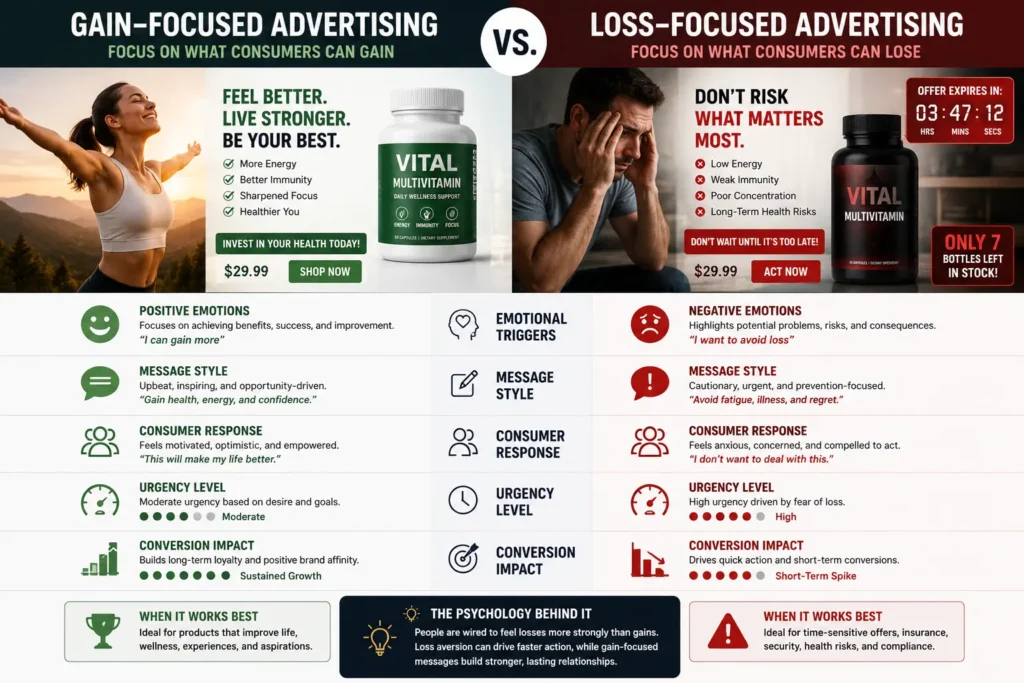
Traditional marketing often focuses on gains.
Examples:
- Save money
- Improve productivity
- Increase profits
- Achieve better results
LAM focuses on avoiding losses.
Examples:
- Don’t lose your discount
- Don’t miss your opportunity
- Avoid paying higher prices later
- Protect your investment
Both approaches can work.
However, avoiding losses often creates stronger emotional responses.
Real-World Examples of Loss Aversion Marketing
Amazon Cart Abandonment Emails
Many consumers add products to carts without completing purchases.
Amazon frequently reminds customers about these items.
The message implies:
“You may lose the opportunity to buy this product.”
This subtle form of LAM encourages action.
Streaming Subscription Renewals
Platforms often send notifications before subscriptions expire.
The emphasis is not on what consumers gain.
Instead, the focus is on what they may lose:
- Access to content
- Saved preferences
- Premium features
Airline Ticket Pricing
Travel websites frequently use messages such as:
- Prices may increase soon
- Only a few seats remain
These messages highlight potential losses and motivate faster decisions.
SaaS Free Trial Campaigns
Software companies regularly remind users:
- Your trial expires in 3 days
- Upgrade now to keep your data
- Don’t lose access to premium features
This is a classic example of LAM.
The Relationship Between Loss Aversion Marketing, FOMO Marketing, and Scarcity Marketing
These concepts are closely related but different.
Loss Aversion Marketing
Focuses on avoiding losses.
Example:
Don’t lose your discount.
FOMO Marketing
Focuses on fear of missing opportunities.
Example:
Don’t miss this event.
Scarcity Marketing
Focuses on limited availability.
Example:
Only 3 items left.
Many successful campaigns combine all three principles.
Understanding their differences helps marketers apply them effectively.
When Loss Aversion Marketing Works Best
Loss Aversion Marketing is particularly effective when:
- Consumers already understand the value of the offer.
- Deadlines are genuine.
- The audience is considering a purchase.
- Competition exists.
- Opportunities are time-sensitive.
In these situations, loss aversion encourages action without feeling manipulative.
When Loss Aversion Marketing Fails
Excessive Fear
Overusing fear can create anxiety and resistance.
Fake Deadlines
Consumers quickly recognize false urgency.
Weak Products
No psychological tactic can compensate for poor value.
Constant Pressure
Consumers eventually become immune to repeated warnings.
Trust remains essential.
Ethical Loss Aversion Marketing
Ethical marketing highlights genuine risks.
Examples include:
- Real expiration dates
- Legitimate price increases
- Actual membership deadlines
Unethical marketing creates false pressure.
Examples include:
- Fake countdown timers
- False scarcity
- Misleading urgency
Long-term trust depends on authenticity.
What Marketers Can Learn From Loss Aversion Marketing
The biggest lesson is simple:
People are often more motivated to avoid losses than pursue gains.
However, marketers should remember:
- Loss aversion amplifies value.
- Loss aversion does not create value.
- Trust matters.
- Authenticity matters.
- Ethical persuasion is more sustainable than manipulation.
The best campaigns use Loss Aversion Marketing responsibly.
Common Myths About Loss Aversion Marketing
Myth 1: Loss Aversion Marketing Is Manipulation
Reality: Ethical loss aversion highlights genuine risks and opportunities.
Myth 2: Consumers Always Respond to Loss Aversion
Reality: Effectiveness depends on relevance, trust, and perceived value.
Myth 3: Loss Aversion Marketing Only Works in E-Commerce
Reality: It is widely used in SaaS, travel, insurance, education, and many other industries.
Myth 4: Fear Is the Only Emotion Involved
Reality: Loss aversion often combines with urgency, trust, belonging, and FOMO.
Key Takeaways
- Loss Aversion Marketing leverages the human tendency to fear losses more than equivalent gains.
- People often act faster to avoid losses than to achieve rewards.
- Loss aversion influences purchasing decisions across many industries.
- Ethical use of loss aversion can improve conversions and engagement.
- Fake urgency and artificial pressure can damage trust.
- Loss Aversion Marketing often works alongside Scarcity Marketing and FOMO Marketing.
Conclusion
The hidden reason people hate losing is deeply rooted in human psychology.
For thousands of years, avoiding losses helped humans survive and make better decisions. Today, that same instinct influences how consumers respond to advertisements, promotions, and purchasing opportunities.
This is why Loss Aversion Marketing remains one of the most effective principles in advertising.
Consumers may appreciate gains.
But they often act to avoid losses.
The brands that understand this principle can create more persuasive campaigns, stronger customer engagement, and better marketing outcomes.
However, the most successful marketers remember an important truth:
Loss aversion should amplify genuine value not replace it.
FAQ
What is Loss Aversion Marketing?
LAM is a strategy that encourages action by highlighting what consumers may lose if they do not act.
Why does Loss Aversion Marketing work?
It works because people naturally experience losses more intensely than equivalent gains.
What are examples of Loss Aversion Marketing?
Examples include expiring discounts, cart abandonment emails, subscription renewal reminders, and limited-time offers.
Is Loss Aversion Marketing ethical?
Yes, when genuine deadlines, risks, and opportunities are communicated honestly.
How is Loss Aversion Marketing different from FOMO Marketing?
LAM focuses on avoiding losses, while FOMO Marketing focuses on missing opportunities.