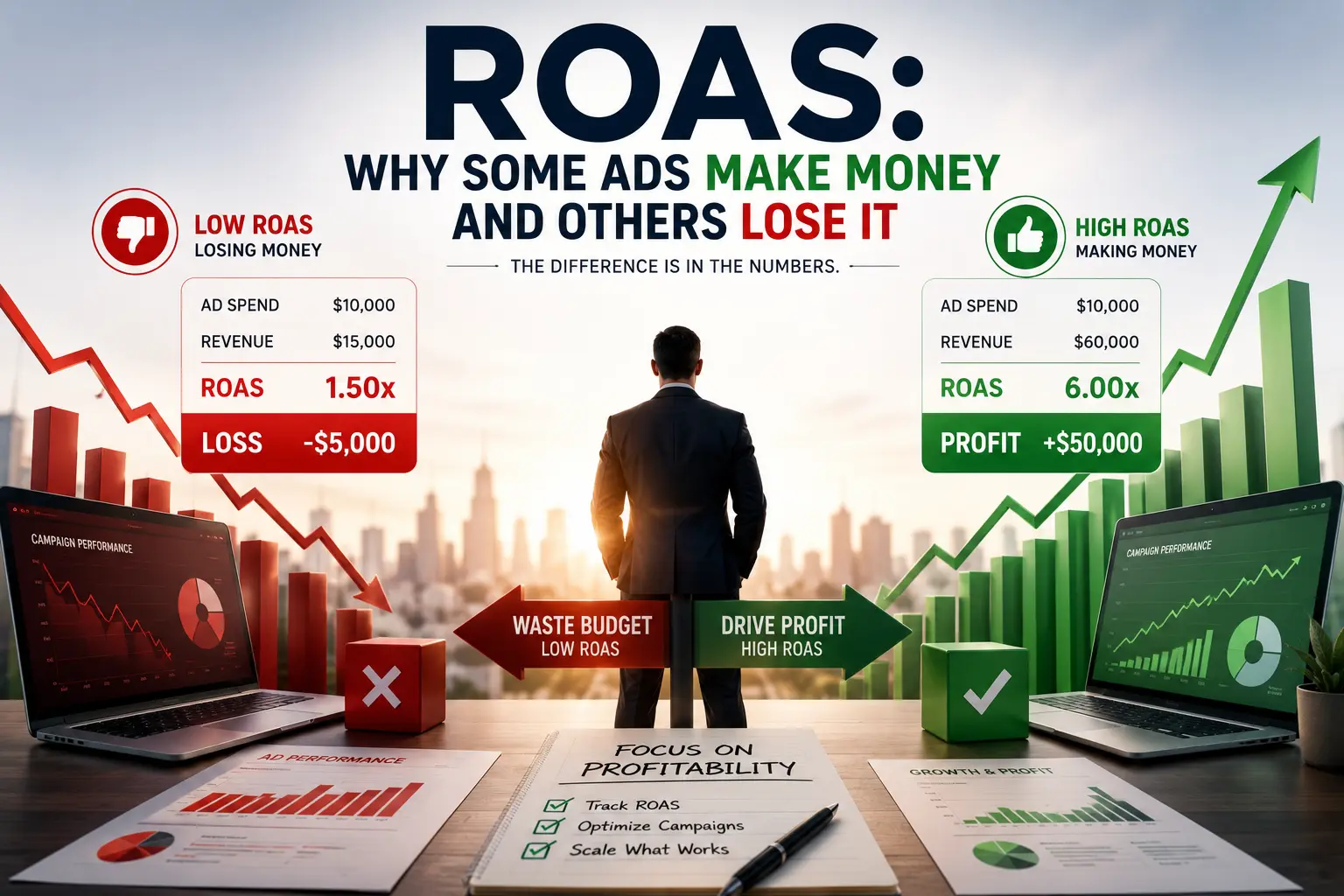

Understanding ROAS can mean the difference between scaling profitable campaigns and wasting money on ads that only appear successful. Imagine running two advertising campaigns.
Campaign A generates ₹10 lakh in sales.
Campaign B generates ₹2 lakh in sales.
Most marketers immediately assume Campaign A is better.
But what if:
- Campaign A spent ₹9 lakh on advertising
- Campaign B spent only ₹20,000
Suddenly the story changes.
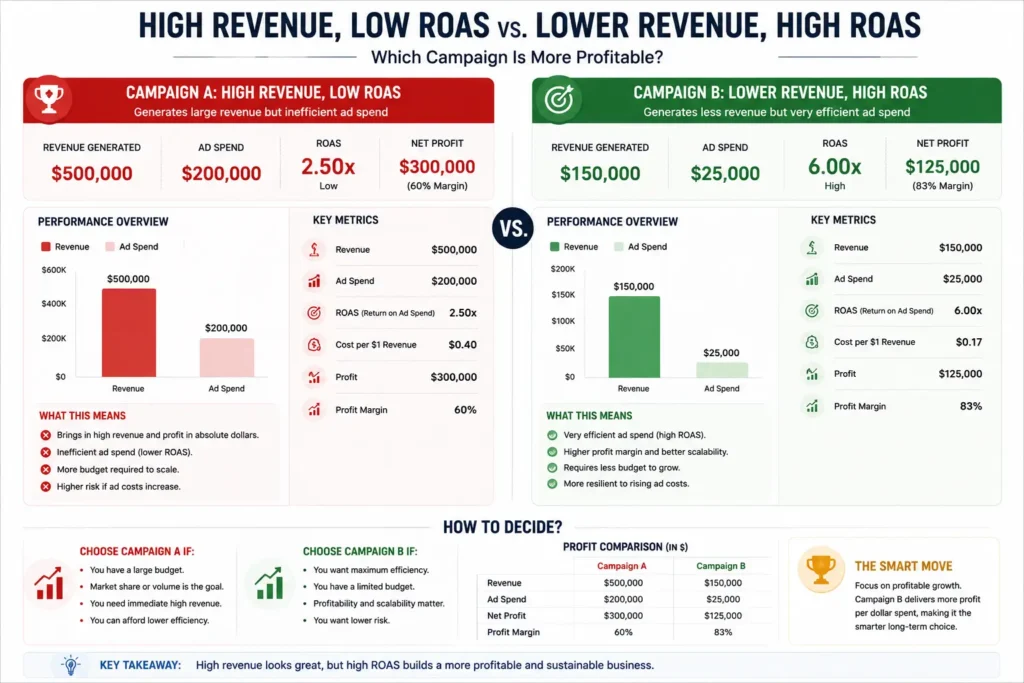
This is why smart marketers don’t judge campaigns based on revenue alone.
Instead, they look at ROAS, one of the most important metrics in advertising.
ROAS helps answer a simple question:
For every rupee spent on advertising, how much revenue did the campaign generate?
What Is ROAS?
Why ROAS Matters More Than Revenue
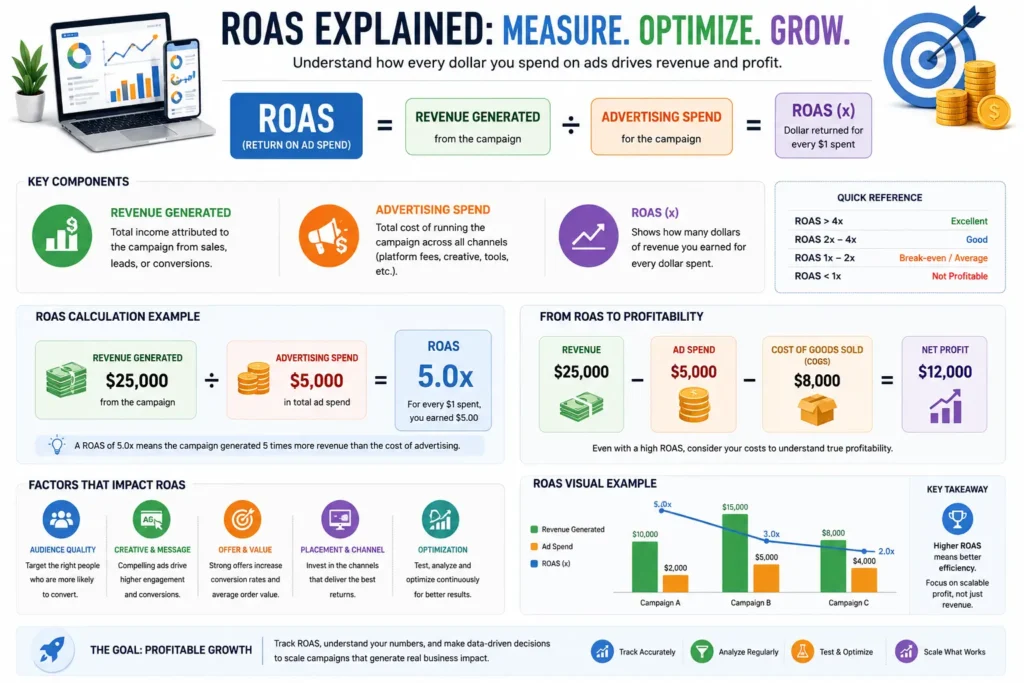
The ROAS Formula Explained
Include formula block:
ROAS=Advertising SpendRevenue
Examples:
- Spend ₹10,000
- Revenue ₹50,000
ROAS = 5
Meaning:
Every ₹1 spent generated ₹5 in revenue.
How to Interpret ROAS
ROAS = 1
Break-even revenue.
ROAS = 2
₹2 earned for every ₹1 spent.
ROAS = 5
Strong performance.
ROAS = 10
Exceptional performance.
Explain why “good ROAS” differs by industry.
Why Some Ads Make Money and Others Lose It
Poor Targeting
Wrong audience.
Weak Creative
Bad messaging.
Low Conversion Rates
Traffic without sales.
High Competition
Expensive advertising costs.
Poor Landing Pages
Good ads, bad experience.
Read More Articles on Advertising Intelligence
Real-World ROAS Examples
E-Commerce Store
Example calculation.
SaaS Company
Example calculation.
Local Service Business
Example calculation.
ROAS vs ROI
This section is critical.
ROAS
Measures advertising efficiency.
ROI
Measures overall business profitability.
Explain difference clearly.
ROAS vs CTR
Link internally to:
The Truth About Click Through Rate and Ad Performance
Explain:
High CTR ≠ High ROAS
ROAS vs CPC
Explain:
Cheap clicks don’t always create revenue.
What Is a Good ROAS?
Discuss:
- E-commerce
- SaaS
- Lead Generation
- Local Businesses
Explain context matters.
Common ROAS Mistakes
Focusing Only on Revenue
Ignoring Profit Margins
Scaling Too Quickly
Tracking Incorrectly
How to Improve ROAS
Improve Targeting
Improve Ad Creative
Improve Landing Pages
Retarget Interested Visitors
Test Multiple Campaigns
What Marketers Can Learn From ROAS
ROAS isn’t just a metric.
It’s a decision-making tool.
The best advertisers optimize for profitability, not vanity metrics.
Common Myths About ROAS
Myth 1
Higher ROAS always means better business performance.
Myth 2
ROAS is the same as ROI.
Myth 3
Revenue alone determines campaign success.
Myth 4
ROAS only matters for e-commerce.
Key Takeaways
- ROAS measures revenue generated from advertising spend.
- High revenue does not always mean high profitability.
- ROAS helps advertisers allocate budgets effectively.
- A good ROAS depends on business model and margins.
- ROAS should be evaluated alongside other metrics.
Conclusion
Many advertisers focus on impressions, clicks, and traffic.
However, none of those metrics answer the most important question:
Did the advertising actually make money?
That is why ROAS remains one of the most valuable metrics in performance marketing.
The campaigns that generate the most revenue are not always the campaigns that generate the most profit.
The best advertisers understand this difference.
They use ROAS to identify winning campaigns, eliminate wasteful spending, and scale advertising efforts that truly contribute to business growth.
FAQ
What does ROAS stand for?
Return on Ad Spend.
How is ROAS calculated?
Revenue divided by advertising spend.
What is considered a good ROAS?
It varies by industry, margins, and business model.
Is ROAS the same as ROI?
No. ROAS measures advertising efficiency, while ROI measures overall profitability.
Why is ROAS important?
It helps advertisers understand whether campaigns generate sufficient revenue relative to their advertising costs.