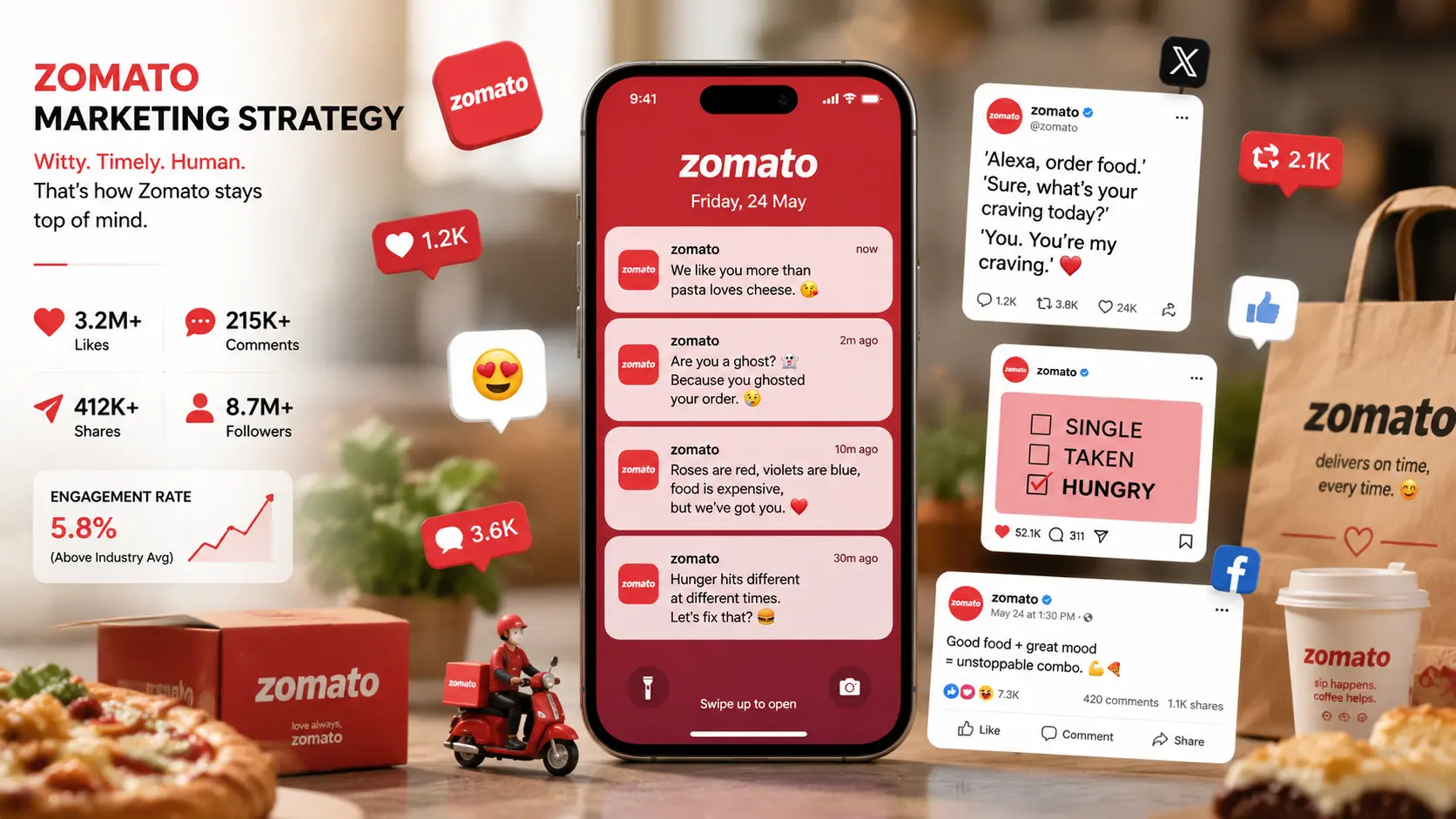

Zomato Marketing Strategy is one of the most successful examples of modern brand building in India.
In a market crowded with food delivery apps, discount offers, and intense competition, Zomato managed to achieve something remarkable.
It became a brand people actively follow.
Most consumers don’t follow food delivery companies on social media.
They don’t share screenshots of push notifications.
They don’t discuss marketing campaigns.
Yet Zomato changed the rules.
Today, millions of people recognize Zomato not just as a food delivery platform, but as a brand with a personality.
Its witty social media posts, clever notifications, relatable jokes, and culturally relevant marketing have helped the company stand out in an extremely competitive industry.
The secret behind this success lies in the Zomato Marketing Strategy, which transformed humor into a powerful competitive advantage.
Rather than relying solely on discounts and promotions, Zomato built emotional connections, cultural relevance, and social engagement that many brands struggle to achieve.
What Is Zomato’s Marketing Strategy?
The Zomato Marketing Strategy focuses on creating a relatable and entertaining brand personality.
Instead of constantly talking about food delivery features, Zomato talks about experiences.
The brand understands that food is emotional.
People order food when they:
- Celebrate
- Feel stressed
- Watch sports
- Stay up late
- Spend time with friends
- Enjoy weekends
By connecting marketing to these everyday moments, Zomato becomes part of consumers’ lives.
This approach makes the brand feel less like a company and more like a familiar friend.
Why Humor Became Zomato’s Competitive Advantage
Most brands compete through:
- Pricing
- Features
- Delivery speed
- Promotions
Zomato chose a different path.
The Zomato Marketing Strategy uses humor to create attention and memorability.
Humor works because it:
- Captures attention
- Creates positive emotions
- Encourages sharing
- Improves recall
- Humanizes brands
Consumers may forget a discount.
They rarely forget a joke that made them smile.
Over time, these small moments build stronger brand relationships.
This is why humor became one of Zomato’s most valuable marketing assets.
The Psychology Behind Zomato’s Marketing
The success of the Zomato Marketing Strategy is rooted in consumer psychology.
Several psychological principles explain why the brand resonates with millions of consumers.
Emotional Marketing
People often associate food with emotions.
Happiness.
Comfort.
Celebration.
Nostalgia.
The Zomato Marketing Strategy uses humor to create positive emotional experiences.
This connects closely with:
When consumers feel something, they remember the brand.
Social Proof
People naturally engage with content that others are engaging with.
When Zomato posts receive thousands of reactions, comments, and shares, they become even more visible.
This creates a powerful social proof loop.
Related reading:
- Emotional Marketing: Why Great Ads Make You Feel Something
- Social Proof Marketing: The Hidden Reason People Follow the Crowd
Relatability
One of the strongest aspects of the Zomato Marketing Strategy is relatability.
The brand frequently jokes about:
- Weekend cravings
- Late-night hunger
- Office lunches
- Diet failures
- Salary day spending
Consumers recognize themselves in these situations.
That familiarity increases engagement.
How Zomato Uses Everyday Moments
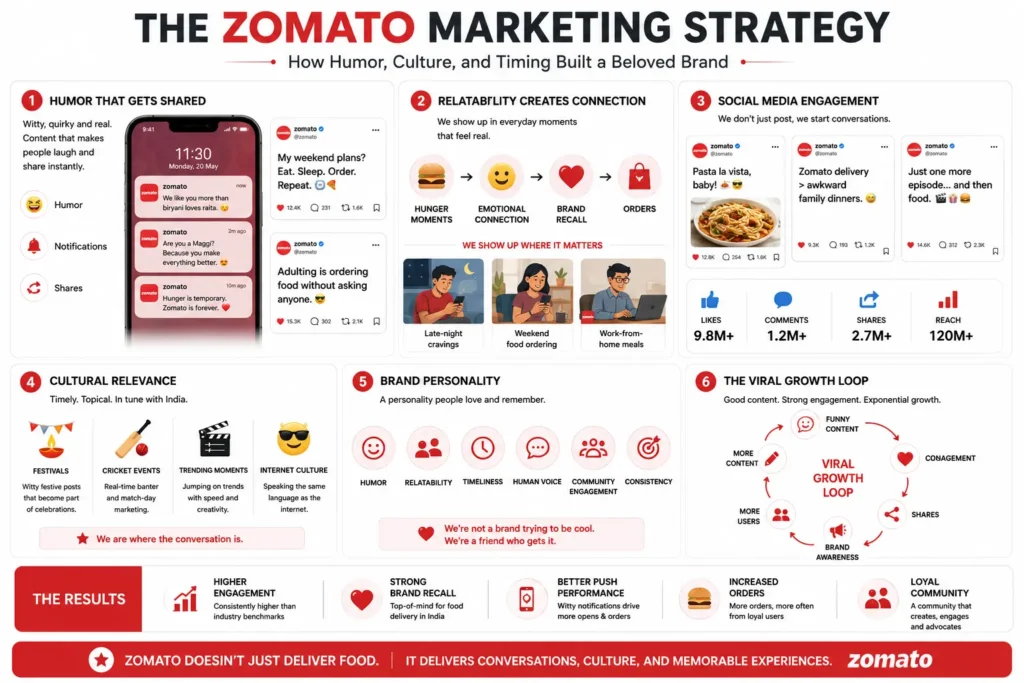
One reason the Zomato Marketing Strategy feels authentic is that it focuses on everyday experiences.
Examples include:
Weekend Food Cravings
Many people order food more frequently on weekends.
Zomato turns this behavior into relatable content.
Late-Night Hunger
The brand frequently references midnight cravings.
This resonates because many consumers experience the same situation.
Salary Day
Zomato often creates content around payday spending habits.
These cultural moments help the brand stay relevant.
Festival Seasons
Rather than simply advertising discounts, Zomato creates content connected to celebrations and traditions.
This approach feels more engaging than direct promotion.
The Power of Push Notification Marketing
One of the most discussed aspects of the Zomato Marketing Strategy is its push notifications.
Most app notifications are ignored.
Many are annoying.
Zomato changed this.
The company uses:
- Humor
- Wordplay
- Curiosity
- Cultural references
to make notifications feel entertaining.
Examples often become viral on social media because consumers voluntarily share them.
This transforms marketing messages into content.
Zomato’s Social Media Strategy
Social media plays a critical role in the Zomato Marketing Strategy.
The company maintains an active presence across:
- X (Twitter)
Instead of behaving like a traditional corporation, Zomato behaves like a creator.
The content focuses on:
- Entertainment
- Culture
- Food
- Humor
- Community interaction
This approach mirrors successful strategies used by brands such as Duolingo.
Related reading:
- The Social Media Strategy Behind Duolingo’s Viral Growth
Why Zomato Feels Human
Many brands sound corporate.
Zomato sounds conversational.
This difference matters.
Consumers connect with humans more easily than companies.
The Zomato Marketing Strategy deliberately uses:
- Casual language
- Humor
- Cultural references
- Everyday observations
to create a more human brand experience.
This makes interactions feel authentic.
Real Campaign Lessons From Zomato
Consistency Matters
Successful marketing is rarely the result of a single campaign.
Zomato consistently publishes engaging content.
Consistency builds familiarity.
Familiarity builds trust.
Brand Personality Creates Differentiation
Many food delivery platforms offer similar services.
Brand personality helps consumers remember Zomato.
Attention Comes Before Conversion
People cannot buy from brands they do not notice.
The Zomato Marketing Strategy focuses heavily on attention.
Once attention is captured, conversion becomes easier.
Cultural Relevance Increases Engagement
Zomato understands internet culture and local culture.
This allows the brand to create content that feels timely and relatable.
What Marketers Can Learn From Zomato
The Zomato Marketing Strategy offers valuable lessons for marketers.
Build a Distinct Personality
People remember personalities more than products.
Focus on Relatability
Consumers engage with content that reflects their experiences.
Entertain Before Selling
Entertainment often creates more attention than direct promotion.
Embrace Cultural Moments
Relevant content feels more authentic and engaging.
Stay Consistent
Long-term consistency creates stronger results than occasional viral success.
Common Myths About Zomato’s Success
Myth 1: Humor Alone Created Zomato’s Success
Reality: Humor helped, but consistency, brand positioning, and customer experience also played important roles.
Myth 2: Any Brand Can Copy Zomato
Reality: Brands must develop personalities that fit their audiences.
Myth 3: Social Media Replaces Product Quality
Reality: Marketing attracts attention. Product quality retains customers.
Myth 4: Viral Content Guarantees Growth
Reality: Long-term brand building requires consistency.
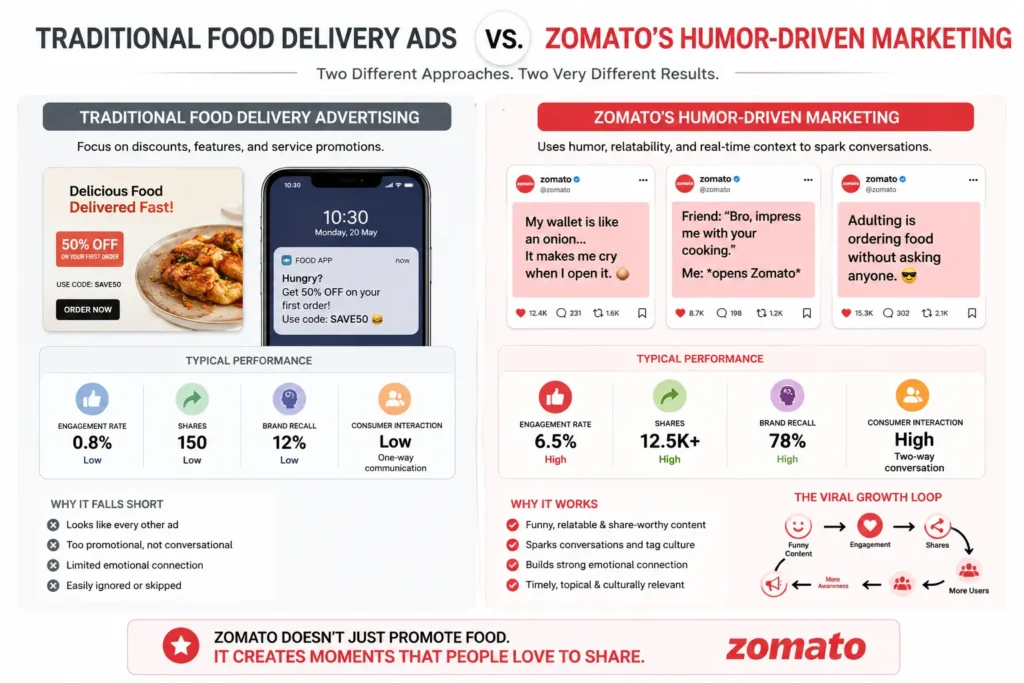
Zomato vs Traditional Advertising
Traditional advertising often focuses on:
- Features
- Pricing
- Promotions
The Zomato Marketing Strategy focuses on:
- Experiences
- Emotions
- Relatability
- Conversations
This shift reflects how modern consumers interact with brands.
People increasingly prefer brands that entertain and engage rather than simply advertise.
Key Takeaways
- Zomato Marketing Strategy transformed humor into a competitive advantage.
- Relatable content helped build stronger emotional connections.
- Push notifications became a unique marketing channel.
- Social media played a major role in brand growth.
- Humor improved engagement, recall, and shareability.
- Brand personality helped Zomato stand out from competitors.
- Cultural relevance increased audience engagement.
- Consistency contributed significantly to long-term success.
Conclusion
The Zomato Marketing Strategy demonstrates that successful marketing is not always about bigger budgets or larger discounts.
Sometimes it is about understanding people.
Zomato recognized that consumers enjoy brands that entertain, relate, and participate in everyday life.
By combining humor, cultural relevance, social media engagement, and strong brand personality, the company transformed itself into one of India’s most recognizable brands.
The lesson for marketers is simple.
Consumers may order food because they are hungry.
But they remember brands that make them smile.
That is how Zomato turned humor into a competitive advantage.
FAQ
What is the Zomato Marketing Strategy?
The Zomato Marketing Strategy focuses on humor, relatability, social media engagement, and brand personality to build strong consumer connections.
Why is Zomato famous for its marketing?
Zomato is known for using witty social media content, clever push notifications, and culturally relevant campaigns that resonate with consumers.
How does Zomato use humor in marketing?
Zomato uses humor through social media posts, notifications, memes, and relatable content based on everyday consumer experiences.
Why is Zomato successful on social media?
The Zomato Marketing Strategy prioritizes engagement, entertainment, consistency, and audience participation rather than direct promotion.
What can marketers learn from Zomato?
Marketers can learn the importance of brand personality, cultural relevance, consistency, and creating content that people genuinely enjoy.
Also Read