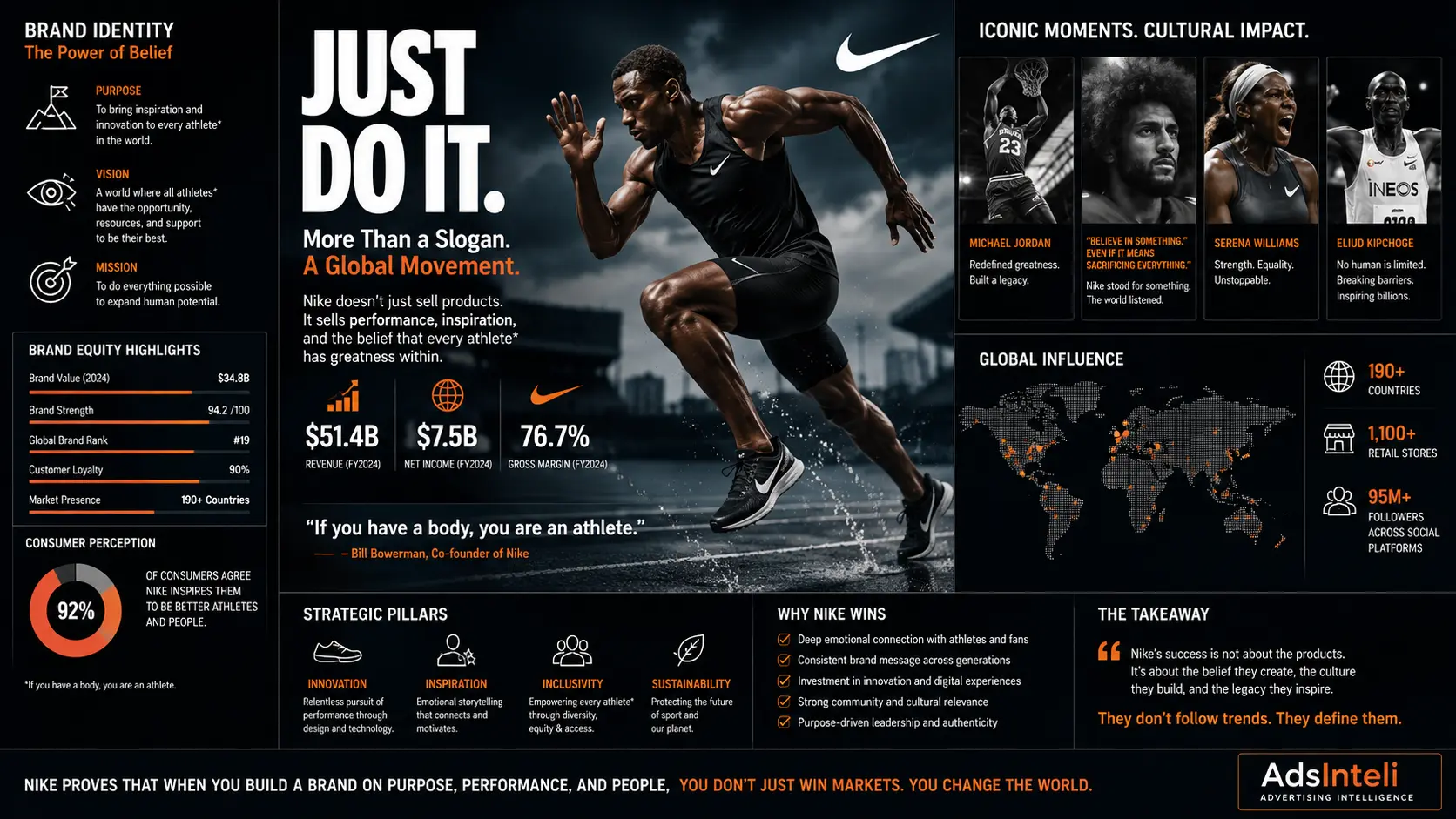

Few brands in the world command the level of recognition, loyalty, and influence that Nike enjoys today.
The company began as a small sports footwear business. Today, it is one of the most valuable and recognizable brands on the planet.
Interestingly, Nike’s success was never built solely on shoes, apparel, or athletic equipment.
Many competitors sell products with similar features.
Yet Nike consistently remains ahead.
The secret lies in its remarkable Nike Brand Strategy, which transformed the company from a sportswear manufacturer into a symbol of ambition, determination, and achievement.
Understanding how Nike built its brand offers valuable lessons for marketers, entrepreneurs, and businesses of every size.
Nike Sells More Than Products
Most companies focus heavily on what they sell.
Nike focuses on what customers aspire to become.
This distinction is critical.
Nike rarely advertises:
- Shoe materials
- Manufacturing processes
- Technical specifications
Instead, its marketing focuses on:
- Achievement
- Perseverance
- Self-improvement
- Personal success
When consumers buy Nike products, they are not simply purchasing shoes.
They are buying into an identity.
They are buying a belief.
This approach forms the foundation of Nike’s brand strategy.
The Power of “Just Do It”
Few advertising slogans have achieved the impact of Nike’s famous phrase:
Just Do It
Launched in 1988, the slogan became far more than a marketing tagline.
It evolved into a mindset.
The phrase works because it is:
- Simple
- Memorable
- Universal
- Action-oriented
Whether someone is training for a marathon, starting a business, or pursuing a personal goal, the message remains relevant.
Great brands create messages that transcend products.
Nike achieved exactly that.
How Nike Uses Emotional Marketing
One of Nike’s greatest strengths is emotional marketing.
Many advertisements attempt to explain why a product is better.
Nike often focuses on why a dream matters.
Its campaigns regularly highlight:
- Personal struggles
- Determination
- Sacrifice
- Resilience
- Achievement
These emotional themes create deeper connections than product features ever could.
People remember how a brand makes them feel.
Nike understands this principle exceptionally well.
The Role of Storytelling in Nike’s Success
Every successful brand tells stories.
Nike tells stories that inspire.
Its advertisements frequently showcase athletes overcoming obstacles rather than simply displaying products.
Examples include:
- Underdog victories
- Comeback stories
- Personal transformations
- Historic achievements
The product often appears as part of the story rather than the center of attention.
This storytelling approach helps audiences connect emotionally with the brand.
As a result, Nike advertisements feel less like advertisements and more like inspiration.
Athlete Partnerships That Built Credibility
Nike’s partnerships with athletes have played a major role in brand growth.
The company has collaborated with some of the world’s most recognizable sports figures.
These partnerships provide:
Credibility
Elite athletes demonstrate product performance.
Aspiration
Consumers associate themselves with success.
Visibility
Athletes bring global exposure.
Emotional Connection
Fans often transfer admiration for athletes to the brand.
However, Nike’s success is not solely about celebrity endorsements.
The company carefully selects athletes whose stories align with its brand values.
Building a Community, Not Just Customers
Many businesses focus on transactions.
Nike focuses on relationships.
The brand has successfully created communities around fitness, sports, and self-improvement.
Examples include:
- Running clubs
- Fitness apps
- Training programs
- Sports events
These initiatives strengthen customer engagement.
When people feel connected to a community, they become more loyal to the brand behind it.
This is one reason Nike enjoys such strong customer loyalty worldwide.
Consistency Across Every Touchpoint
Strong brands are consistent.
Nike has maintained a remarkably consistent brand identity for decades.
Whether you visit:
- A Nike store
- The Nike website
- A social media profile
- An advertising campaign
The same themes appear repeatedly:
- Inspiration
- Performance
- Achievement
- Confidence
Consistency creates familiarity.
Familiarity builds trust.
Trust drives long-term brand value.
Why Nike Rarely Competes on Price
Many businesses attempt to win customers through discounts.
Nike takes a different approach.
Strong brands rarely compete solely on price.
Instead, Nike competes through:
- Brand perception
- Customer loyalty
- Emotional connection
- Product innovation
Because customers perceive greater value, Nike can often command premium pricing.
This demonstrates the financial power of strong branding.
Read More Articles on Brand Intelligence
The Psychology Behind Nike’s Brand Strategy
Nike’s success is rooted in several psychological principles.
Identity Marketing
People buy products that reflect who they are or who they want to become.
Social Proof
Athletes and consumers reinforce trust in the brand.
Emotional Connection
Stories create stronger memories than product specifications.
Aspirational Marketing
Nike consistently shows what is possible through effort and determination.
These psychological principles make the brand significantly more powerful than product-focused competitors.
What Businesses Can Learn From Nike
Nike’s approach offers valuable lessons for organizations of all sizes.
Sell Transformation
Customers care about outcomes more than features.
Create Emotional Connections
Emotion often drives decisions.
Stay Consistent
Strong brands maintain clear messaging.
Tell Stories
Stories build engagement and trust.
Build Communities
Loyal customers become brand advocates.
These lessons apply far beyond sportswear.
Common Myths
Myth 1: Nike Became Successful Because of Advertising Budgets
Large budgets help, but strategy, consistency, and emotional connection were equally important.
Myth 2: Great Products Alone Built Nike
Many companies create quality products. Nike combined product quality with exceptional branding.
Myth 3: Only Large Brands Can Use Nike’s Strategies
Businesses of any size can use storytelling, emotional marketing, and community building.
Key Takeaways
- Nike sells identity, not just products.
- Emotional marketing drives stronger connections than feature-based marketing.
- Storytelling is central to their success.
- Consistency strengthens brand recognition.
- Athlete partnerships build credibility and aspiration.
- Strong branding reduces reliance on price competition.
- Community building increases customer loyalty.
Conclusion
Nike’s rise from a small footwear company to one of the world’s most powerful brands was not an accident.
It was the result of a carefully executed brand strategy built on emotion, storytelling, consistency, and human psychology.
While products remain important, Nike’s greatest achievement has been creating a brand that people connect with on a deeper level.
The company’s success demonstrates a timeless marketing lesson:
People may buy products, but they follow beliefs, identities, and stories.
That is how they built one of the world’s most powerful brands—and why it continues to influence marketers around the world.
FAQ
What is Nike’s brand strategy?
Nike’s brand strategy focuses on inspiration, achievement, emotional marketing, storytelling, and identity-based branding.
Why is Nike considered a powerful brand?
Nike has built strong emotional connections, consistent messaging, and global recognition over several decades.
What role does storytelling play in Nike’s marketing?
Storytelling helps Nike inspire audiences and create emotional engagement beyond product features.
Why is the Nike’s “Just Do It” slogan so successful?
The slogan is simple, memorable, motivational, and relevant to people across different situations.
What can businesses learn from Nike?
Businesses can learn the importance of emotional marketing, storytelling, consistency, community building, and customer-centric branding.